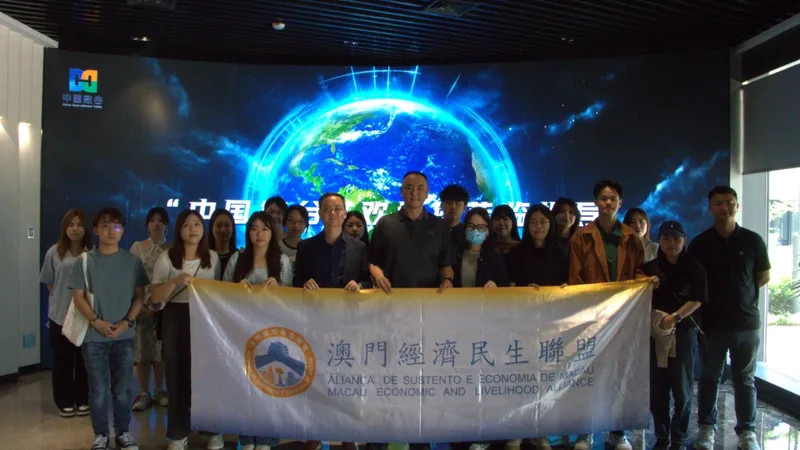
This stop started with data. China Digital Valley operates the underlying infrastructure and analytics for tens of thousands of small and mid-sized enterprises in Zhejiang. The team walked us through a single dashboard: manufacturing line status, logistics heatmaps, customs exceptions, consumer-credit risk. The province has been turned into a single operating chart. The implication for Macau is direct — if our AI Strategy is to move from paper to infrastructure, the data layer has to be consortium-owned, not vendor-owned.
The afternoon was a reminder that physical retail is not dying — it is being rewritten. Wulin Yintai in central Hangzhou reopened after a multi-year repositioning. Half department store, half art gallery, half tech showroom, half food hall. The foot traffic is back, the rents are higher than before, and the demographics skew younger than the city average.
What interested me most was the layout: every floor has a different curator, and the building's IP is licensed to other cities in China. That is the new department-store playbook — not bigger boxes, but licensed floor concepts. Macau's malls could adapt the same model for cultural IP floors that rotate with the festival calendar.
By the end of the day three founders had agreed to second-visit Macau in the autumn for a closed-door retail-format workshop. The pipeline is now the harder problem than getting the meeting.
The province has been turned into a single operating chart. The data layer has to be consortium-owned.
China Digital Valley · Wulin Yintai
China Digital Valley provides the data infrastructure backbone for tens of thousands of SMEs in Zhejiang. Wulin Yintai is a central-Hangzhou department store reopened after a multi-year repositioning as a hybrid retail / cultural / tech destination.

Media coverage: PE Daily / 投資界 — 澳杭携手 共绘数字经济与文化交流新丝路 (9 Jun 2025) →